Products » Paceline Bike Lane Barriers
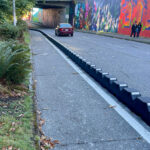
Paceline is designed to keep cyclists safer by creating a highly visible, physically protective bike lane that separates cyclists from vehicular traffic.
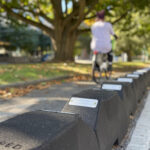
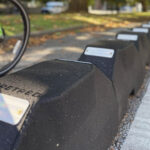
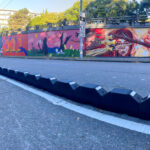
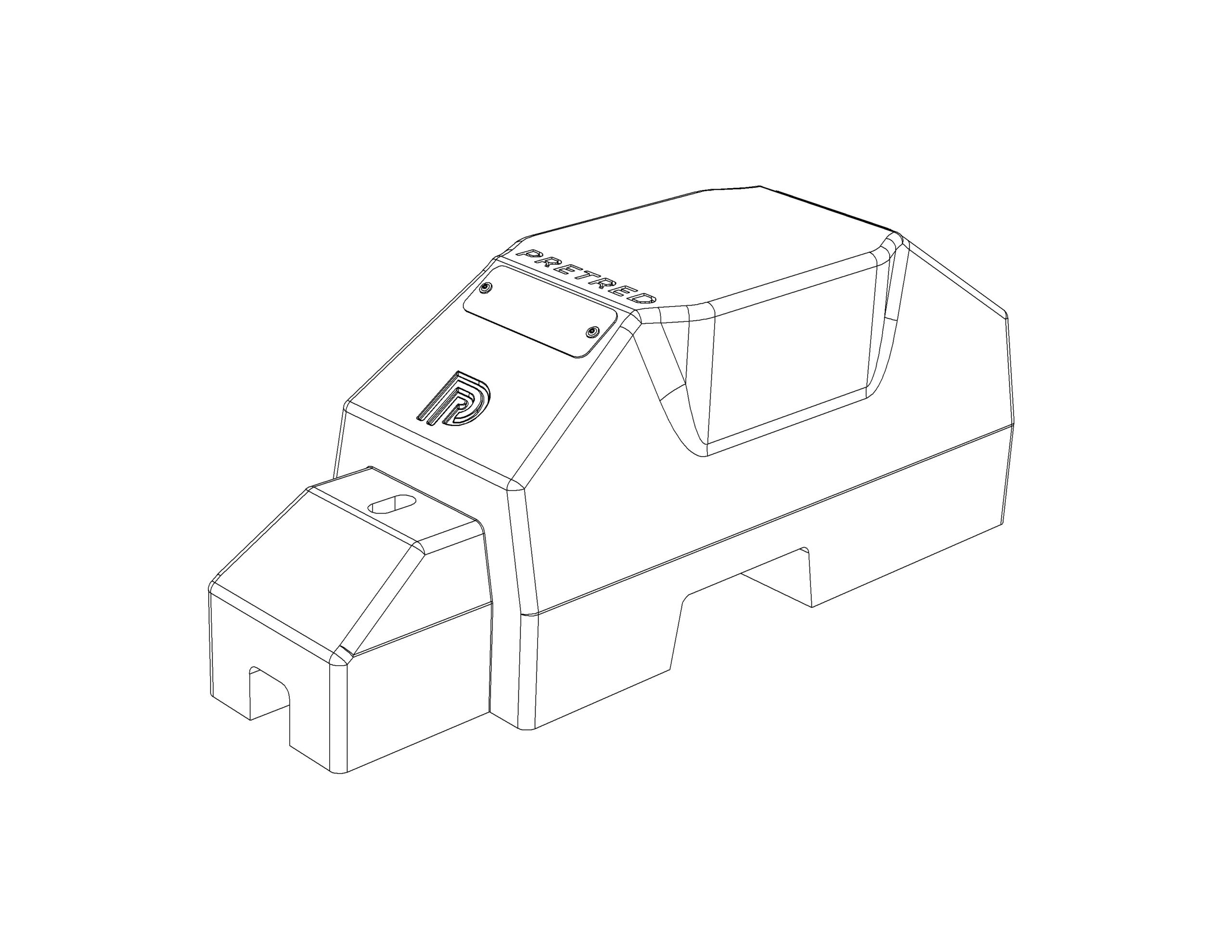
Paceline Bike Lane Barriers provide protection without the mess of complicated installs. Each barrier is made from recycled rubber in a compact, dense profile that is easy to handle and quick to deploy. The interlocking design lets you create a continuous run for protected lanes.
PRODUCT DETAILS
A bike lane delineator provides a visual separation between cyclists and vehicle traffic. A bike lane barrier is a physical object that separates the protected bike lane from the vehicle lane.
What is the difference between flexible bollards and bike lane delineators?
A flexible bollard, also called a flex post, is a vertically oriented bike lane delineator. Its height makes the division between the protected bike lane and vehicle traffic easier for drivers to see. Flexible bollards can be attached to the top of Paceline bike lane barriers using lag screws.

A protected bike lane uses a physical separator, such as a concrete curb or rubber bike lane barrier, to separate cyclists from vehicle traffic. Paceline is the first substantial recycled-rubber barrier designed specifically for protected bike lane applications.
Paceline bike lane barriers are typically installed using concrete anchors or asphalt stakes. The anchors or stakes pass through connection holes that align when the modular bike lane barriers are joined together. Paceline can be deployed quickly and integrated with existing bike lane infrastructure.
Paceline bike lane barriers can support temporary or permanent protected bike lane installations. Depending on the application, anchors may not be required. However, an unanchored bike lane barrier will experience greater displacement if struck by a vehicle.
Yes. Every Paceline bike lane barrier includes traffic-facing reflectors on both sides to improve visibility for drivers and cyclists.
Yes. Flexible bollards, flex posts and other vertical bike lane delineators can be attached to the flat top surface of Paceline bike lane barriers.
Yes. Paceline is a versatile, modular bike lane barrier system that can be configured for different protected bike lane layouts, lengths and intersection transitions.
Each Paceline bike lane barrier is 30 inches long, 12 inches high and 10 inches deep. When multiple barriers are connected into a continuous bike lane barrier system, each unit provides 24 inches of effective length.
Each Paceline recycled rubber bike lane barrier weighs approximately 85 pounds.
Paceline bike lane barriers may slow oncoming stormwater, but open drainage channels run beneath each barrier in both directions. These channels allow water to pass underneath the modular barrier system. See the Paceline specification sheet under downloads for complete stormwater drainage details.
Paceline is designed as a modular bike lane barrier system that can accommodate different protected bike lane lengths and layouts. Individual Paceline barriers may also be installed where space or design requirements call for a single unit.
Paceline provides a highly visible, physical bike lane separator between cyclists and vehicle traffic. Unlike markings or visual delineators alone, the substantial recycled-rubber barrier creates physical separation engineered to improve both actual and perceived cyclist safety.
Paceline bike lane barriers are made from at least 95% recycled tires. Like all Pretred products, Paceline repurposes waste tires to create durable transportation infrastructure.
Yes. At the end of their service life, Paceline recycled rubber bike lane barriers can be recycled into new Paceline units.
Share your project needs and we will deliver a quote for high-performance barriers made from recycled materials.